Beauty is pain gets repeated like gospel in a salon chair, usually right before somebody tightens your edges to the point of regret. The line has survived because women have been trained to treat discomfort as part of the package. But when a style starts pulling, burning, or throbbing, that is not glamour doing its thing. That is your scalp sending a complaint to management.
Tight braids, cornrows, sew-ins, extensions, ponytails and buns can all create the same problem when they are installed with too much tension. The American Academy of Dermatology flags repeated pulling as a cause of traction alopecia, which is hair loss from strain on the follicles. In the beginning, easing off the tension can help. Leave it long enough, and some follicles stop producing hair altogether. That is not a cute side effect; that is damage.
When the style starts talking back
Many women ignore the first warning because the hairstyle looks neat, expensive and freshly done. The head might be sore, but the mirror says the parts are clean and the braids are crisp, so the mind negotiates with the body. This is a bad idea.
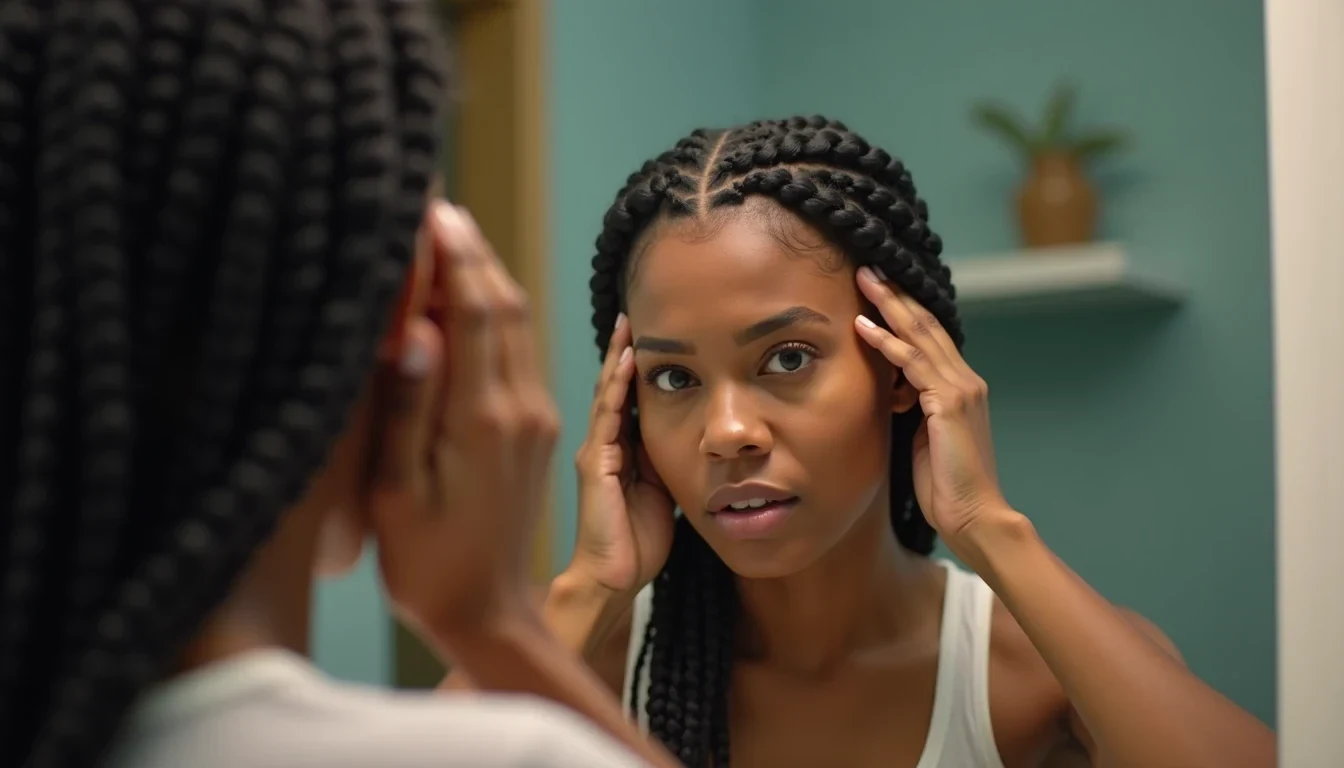
Pain is the first clue. So are little bumps along the hairline, headaches that show up after the install, and short broken hairs around the edges. None of those signs mean the style is secure. They mean the hair is under stress. If the scalp feels stretched, lifted or tender, the style is already working against you.
> If your scalp is asking for mercy in the chair, do not wait until wash day to say something.
The same warning applies when the irritation starts a day or two later. A style can look fine and still be too tight. A good install should feel firm, not punishing. If someone tells you pain is normal, that is usually a stylist protecting the look, not the hair.
The edges take the beating
The hairline gets hit first because it is fragile. Temples, the front edge, the nape and the partings all take more strain than the middle of the head. This is why you often see thinning around the front before anywhere else. The crown can also suffer when a heavy weave or long extensions pull upward or drag everything down.
Relaxed hair under extensions has its own problem. Chemical processing weakens the strand, so when extra weight or tension gets added on top, the hair gives up faster. The style looks polished while the hair underneath is quietly taking a beating.
This is where the whole beauty-is-pain script gets exposed as nonsense. A hairstyle meant to protect the hair should not leave the edges looking like they need a recovery plan and a support group.
How long is too long
Stylists and dermatologists usually push for shorter wear times than many women want to hear. Most protective styles should stay in for about 4 to 8 weeks, depending on the style, the tension and how fast your own hair starts to protest.
Braids often live around the 6 to 8 week mark if they are not tiny and tight. Smaller braids usually need to come out sooner, around 4 to 6 weeks, because the pull builds up faster. Cornrows are often better kept to 2 to 4 weeks since they sit close to the scalp and can stay tense for longer than they should. Weaves and extensions also need a limit, usually around 6 to 8 weeks, before matting and tangling turn removal into a breakage festival.
Then there is the break between styles, the part everyone skips because it feels inconvenient. Hair and scalp need time off too. A couple of weeks without extensions or braids gives you space to wash properly, moisturize, detangle and check whether the hairline is actually holding up.
A protective style should still feel like a human being lives there
A truly protective look has a few simple rules. It should not hurt. It should not trigger headaches. It should not leave bumps, redness or blistering along the partings. It should not make your scalp feel trapped.
The style should also be installed with enough slack that your natural hair can survive the assignment. Bigger parts help. Lighter extensions help. Less pulling at the roots helps. If the install feels tense from the jump, waiting for it to “settle” will not help.
Cleanliness matters too. A scalp buried under product and sweat for weeks on end is not being protected; it is being ignored. Washing, light moisturizing and proper drying are part of the deal. A style that looks neat but leaves your scalp itchy and inflamed is not a win. It is delayed trouble.
What to do before the damage becomes permanent
Speak up while the hair is being done, not after the Uber ride home. If something feels too tight, say so. The right stylist will loosen it and move on. If the answer is attitude, find someone else next time.
Watch the hairline closely over time. If the same areas keep thinning, or if broken hairs keep showing up around the front and temples, the style is too much for your scalp. Early traction alopecia can sometimes improve when the pulling stops. Once the follicle has been scarred, the hair may not grow back.
That is the ugly truth hiding behind all the “beauty is pain” talk. Pain is not a requirement. It is a warning. If the style protects your hair in the chair, on the street and after six weeks of wear, it has done its job. If it leaves your edges begging for mercy, it was never protective in the first place.