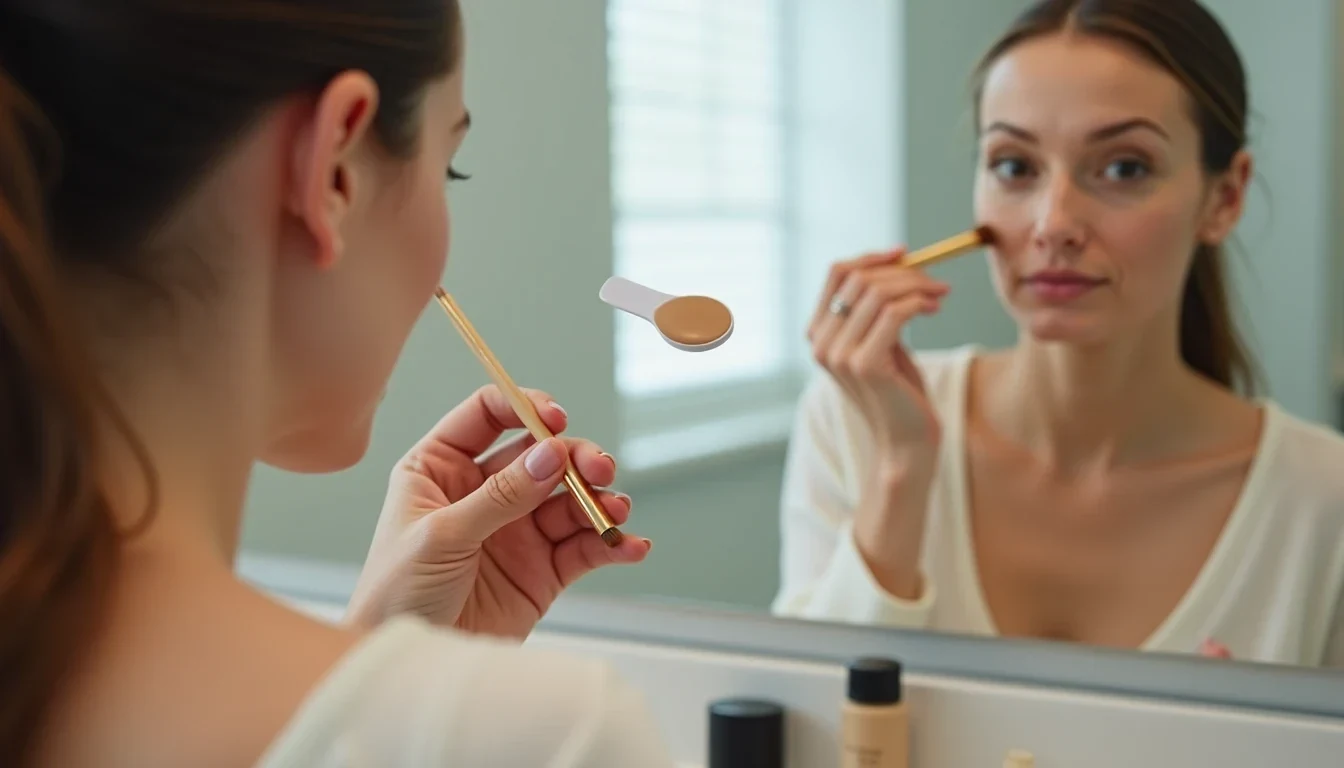
You think your foundation provides coverage because the bottle says SPF 30, but it does not. The amount of foundation most women apply in the morning, perhaps a pea-sized dab blended across the face, is roughly a quarter to two-fifths of what laboratories use to test that SPF number. Laboratories slather on 2 milligrams of product per square centimetre of skin. Your usual application is closer to 0.5 or 0.8 mg/cm². An SPF 30 foundation probably delivers something closer to SPF 5 or SPF 10 in real life, which offers minimal protection in the Joburg afternoon sun or Cape Town’s glare off the pavement.
The maths is brutal but simple. An average adult face spans about 500 to 600 square centimetres. To achieve the tested SPF 30, you would need roughly 1.2 grams of product on that face alone. That is a quarter-teaspoon, or two full finger-lengths of sunscreen. If you apply that much foundation, you will look like you are wearing stage makeup for a primary school play. Foundation is designed to disappear into skin, to even tone without weight. Sunscreen, properly applied, sits there as a deliberate, visible layer. These two products have opposite missions, so asking one to do the other’s job was always going to fail.
Why Foundation Was Never Built for This
The problems run deeper than quantity. Foundation application is inherently patchy. You concentrate product on the centre of the face, the cheeks, the forehead, and maybe a little on the chin. The jawline gets blended thin. The hairline gets whatever is left on the brush. Around the eyes, you probably skip entirely to avoid creasing or irritation. Ears, neck, décolletage, and lips see just as much UV but receive none of your foundation’s nominal protection. The tops of ears are particularly vulnerable and a common site for later skin damage, yet almost no one is patting NARS or Maybelline there.
The formula itself also presents issues. Most foundations offer no broad-spectrum guarantee, meaning they may block some UVB (the burning rays) while leaving UVA (the ageing, cancer-linked rays) largely unchecked. They are rarely water-resistant or sweat-resistant, so the minimal protection they provide degrades within an hour of heat or humidity. SPF values in foundation tend to cluster between 15 and 25, below the 30-plus threshold that dermatologists recommend for daily use. The American Academy of Dermatology is explicit on this: broad-spectrum, SPF 30 minimum, water-resistant if possible. Your favourite luminous-skin tint checks none of these boxes reliably.
What Proper Protection Actually Looks Like
Start with a dedicated sunscreen as the final step of your skincare routine, before any primer or colour product. Cleanse, treat with serums, moisturise if needed, then apply that quarter-teaspoon of broad-spectrum SPF 30 or higher to your face, neck, ears, and any exposed chest area. Wait a full fifteen to twenty minutes before reaching for primer or foundation. This absorption window allows sunscreen time to form its protective film. Rushing into makeup application can break that film or cause pilling that defeats the purpose.
Texture choice helps. Modern chemical sunscreens and newer mineral formulations come in featherlight, serum-like consistencies that sit well under makeup. Look for zinc oxide or titanium dioxide if your skin runs sensitive, or avobenzone-based chemical filters if you prefer zero white cast. The active ingredient family matters less than consistent, generous application and the broad-spectrum label.
The Reapplication Problem Nobody Solves
Sunscreen degrades. The active ingredients break down with UV exposure, and sweat, oil, and friction remove product from the skin surface. Dermatologists say reapply every two hours, or immediately after swimming or heavy sweating. Doing this over a full face of carefully applied foundation feels absurd. You are not washing everything off in the Clicks bathroom and starting from scratch at 11am.
So you compromise smartly. SPF setting sprays exist now, broad-spectrum formulas in mist form that you can spritz over makeup without disturbing much. SPF powders, translucent or tinted, dust on for a top-up while controlling shine. Solid SPF sticks let you pat protection onto high-risk zones like the nose and cheekbones without dragging your base around. A damp beauty blender with a thin layer of liquid sunscreen can press product into strategic areas. None of these methods achieves full laboratory-standard recoverage, but they meaningfully extend protection through a workday or a braai that stretches into afternoon.
The Spots You’re Still Forgetting
Even women who wear proper sunscreen often apply it like they apply foundation: face-centric, stopping at the jawline. The neck and chest age conspicuously and deserve the same quarter-teaspoon treatment. Eyelids need gentle patting with a finger, using a formula safe for that thin skin. Lips need their own SPF balm, since foundation never goes there and lip cancer is real. The backs of hands catch years of driving-sun exposure and show it early in dark spots and thinning skin. These are not beauty-blog paranoias. They are the places dermatologists consistently find damage in patients who thought their morning routine was sufficient.
The Real Talk
Your SPF foundation is not useless. It offers a minor supplementary buffer, a little extra between your proper sunscreen and the world. But treating it as your primary defence is a category error, like assuming the pepper spray on your keychain replaces locking your car. The product was designed for appearance. Sunscreen is designed for protection. Layer them in that order, respect the quantities, reapply with the tools that make it possible, and stop letting a label number lull you into false confidence. Your skin keeps score even when you do not.