Your hair already has a smell from shampoo, conditioner, the faint smoke from last night’s braai, or the coconut oil your auntie swears by. The beauty industry has decided this is a problem, or more accurately, an opportunity. Hair perfume, 2026’s most predictable new obsession, wants you to believe your R3,200 bottle of Coco Mademoiselle is too precious for your ends and that a separate, smaller, still-expensive product is the solution.
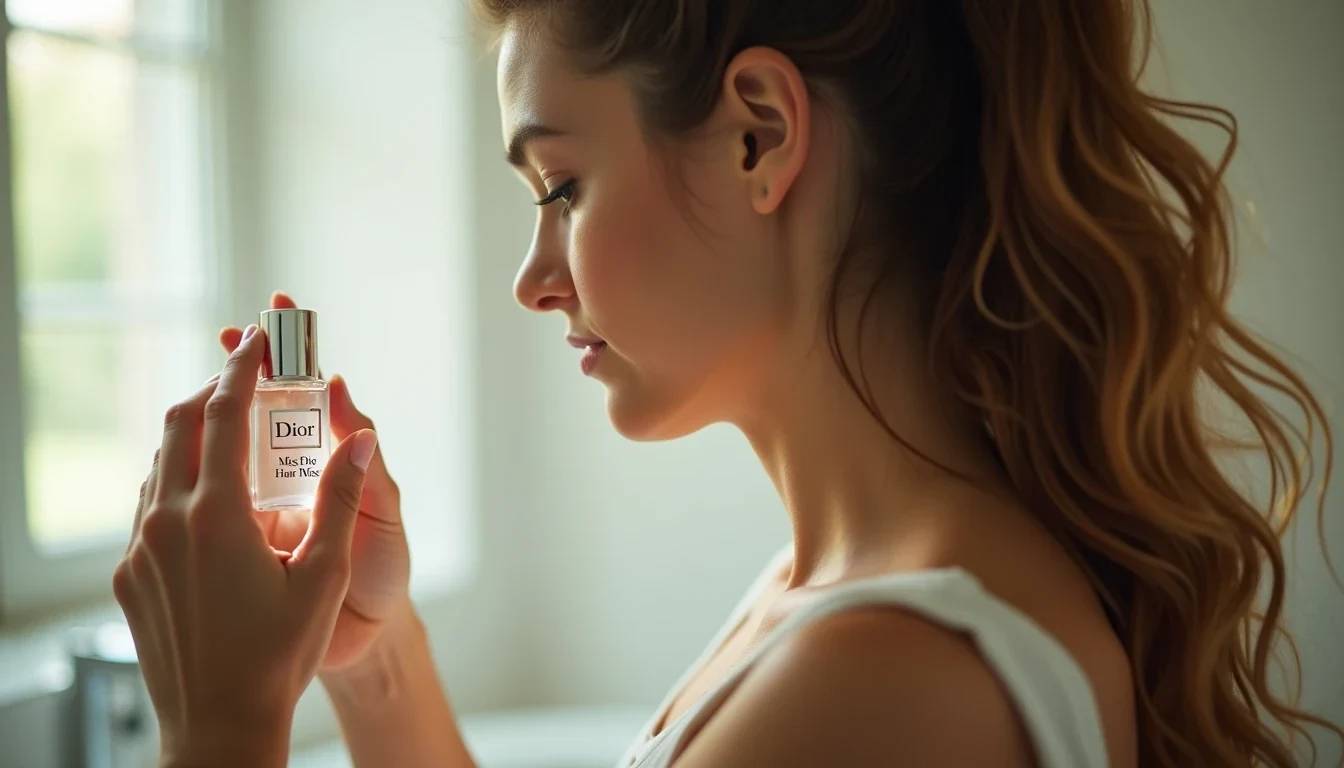
The logic is seductive. Luxury fragrance prices have climbed to the point where spraying your wrists and neck feels like an event. Hair perfume offers the same prestige at a gentler entry point. Dior’s Miss Dior Hair Mist costs about R1,050 for 30ml. Chanel’s Chance Eau Tendre variation hits around R1,100 for 35ml. Both sit comfortably below their full-bottle siblings, which start near R2,800 and climb past R4,500. You get the brand, the emotional hit of luxury, and the WhatsApp voice note to your friend about your new thing, all without the invoice that ruins your month.
What you’re actually buying
The formulation pitch sounds convincing on paper. Standard perfumes carry 70-90% alcohol, the ethanol that makes scent project and evaporate quickly on skin. Hair versions dial this back significantly, often below 20%, sometimes eliminating it entirely. Gisou’s Honey Infused Hair Perfume leads with water and conditioning agents rather than alcohol denat. Sachajuan’s Protective Hair Perfume includes UV filters, which your neck does not need but your colour-treated lengths arguably do.
The alcohol difference matters for specific heads. Chemically treated hair, relaxed or coloured or heat-damaged, has cuticles that sit more open and porous. High ethanol concentrations strip moisture from already compromised strands. Hair perfumes replace that solvent with glycols, humectants, silicones, and the occasional oil. They promise scent without the straw-like aftermath of misting your weave with whatever sits on your dresser.
Whether this justifies a separate product depends on what you already own. An alcohol-free body mist, lightly applied, avoids the same drying problem. The question is whether hair perfumes do something those cannot, or whether the beauty industry has simply found another surface to fragrance after running out of new body parts to target.
The longevity claim
Hair’s structure holds scent differently than skin. Its porous, fibrous nature traps molecules in ways your constantly regenerating epidermis does not. Movement reactivates the fragrance, a subtle diffusion throughout the day that can feel more present than it objectively is. Brands like Byredo market this as a “light and invisible veil,” which is poetic language for “you’ll smell it when you whip your hair in Woolies.”
Dedicated formulations include polymers and fixatives designed to cling to strands. They promise four to six hours of noticeable presence against the one to two hours a standard body mist might manage before disappearing. The actual experience varies wildly by hair type. Porous, textured, or damaged hair holds scent longer. Fine, straight, freshly washed hair lets it slip away faster. The marketing rarely acknowledges this, preferring the universal promise.
The price per millilitre trick
The affordability narrative has a catch. Yes, R1,050 beats R3,200. But hair perfumes come in small bottles, 30ml, 35ml, or 50ml. Body mists, by contrast, offer 90ml or 236ml for R250 at Bath & Body Works or under R150 from Clicks house brands. The price per millilitre often favours the “cheap” option by a significant margin. You are paying for concentration, for brand positioning, and for the feeling of curation.
Gisou lands in the middle at roughly R800 for 50ml. Sol de Janeiro’s Cheirosa 62, technically a hair and body mist, offers 90ml for around R500. The category blurs intentionally. What makes something a “hair perfume” versus a mist you could also use on hair? Often just the marketing budget and the shelf it sits on.
The real benefits, and the real question
For specific situations, the product has genuine utility. UV protection matters for colour that fades in South African sun. Frizz control helps in dry Highveld winters. Odour neutralisation has obvious appeal for hair that absorbs braai smoke, taxi fumes, or kitchen grease. These are functional advantages over a basic body mist, not merely scented indulgence.
The build-up risk goes unmentioned in most marketing. Daily use of silicone-heavy formulas on fine hair creates exactly the dullness and weight these products promise to solve. You may find yourself washing more frequently, which strips natural oils, creating the dryness that justifies the conditioning hair perfume in the first place. This cycle is not accidental.
Who actually needs this
The honest answer: almost nobody, and more people than want to admit it. If you have healthy, untreated hair and an alcohol-free mist you already like, the dedicated category offers marginal improvement for significant markup. If your hair is processed, dry, colour-treated, or exposed to serious sun, the formulation differences provide real, if incremental, benefit.
The beauty industry’s broader project is more transparent than it pretends. Having colonised skin, lips, eyelashes, cuticles, and the various folds and contours of the body, hair represented one of the last unscented territories. The 2026 trend push is not responding to consumer demand so much as creating it, manufacturing a problem your existing routine supposedly cannot solve.
You will see these products everywhere this year. Your favourite influencer will mention one casually in a get-ready-with-me. The packaging will be beautiful. The price will feel almost reasonable compared to what you once spent on perfume. Whether you buy in depends on whether you believe your hair has a smell that needs fixing, or whether you recognise the same playbook that sold you eye cream for a part of your face that already had moisturiser.